
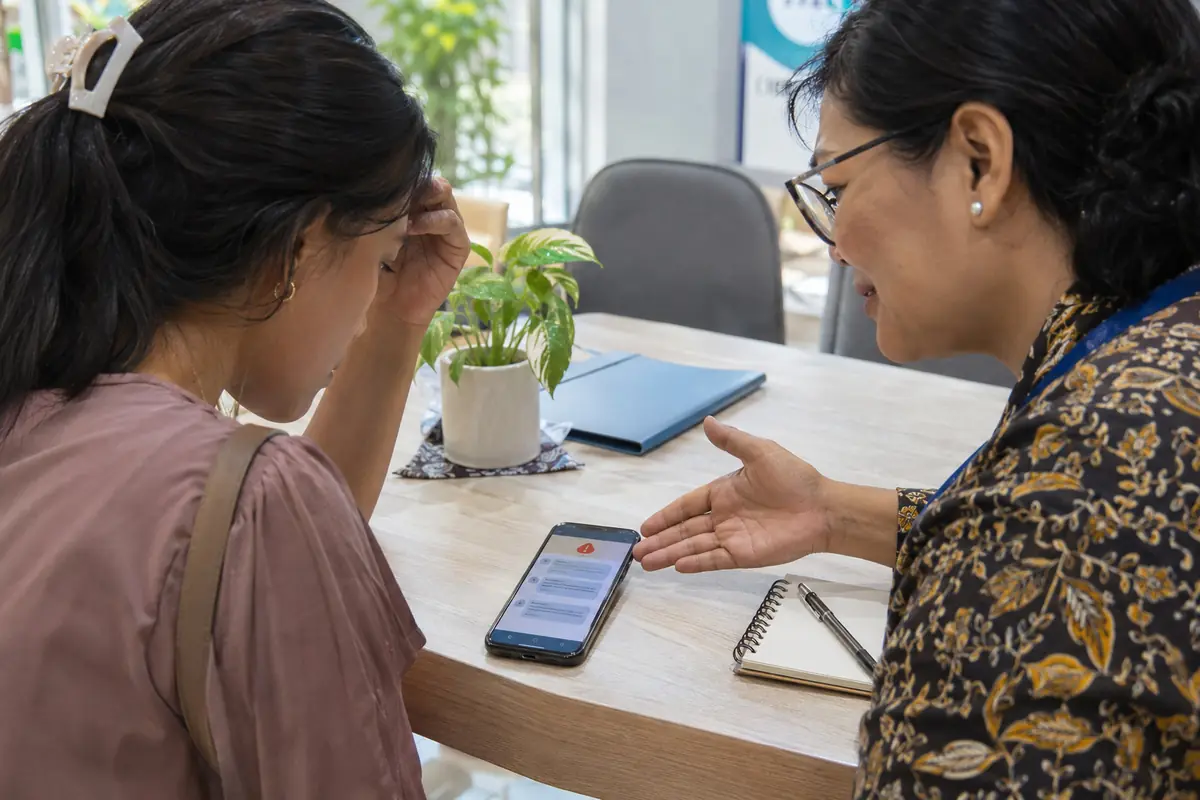
In Indonesia, a loan shark is a lender without a licence whose illegal lending carries risks such as extreme costs, harassment and the misuse of personal data. Local names include rentenir, lintah darat and bank keliling, while the modern version is the illegal online lender that works through a mobile app. Collection relies on pressure instead of legal process. The harm falls hardest on people who need cash urgently and have been refused by banks, such as informal workers, small traders and households facing a medical or school bill.
How informal moneylenders operate
The traditional moneylender is usually a neighbour, a market figure or a travelling collector who offers small sums quickly and without paperwork. Repayment is requested daily or weekly, and the interest is often disguised as a flat fee for the borrower to accept. Because nothing is written down, the borrower cannot prove how much was lent or repaid, and the lender can raise the figure whenever he likes.
Collateral may be a motorbike ownership book, a land certificate or household goods. Some lenders keep these documents as pressure, which turns a modest debt into a threat to the family's livelihood.
Cooperatives that exist only on paper deserve the same caution. Some unlicensed savings and loan groups collect membership fees and then lend at punishing rates, relying on the trust that a cooperative name inspires. A genuine cooperative has a registered legal status, annual member meetings and published rules.
The online version of illegal lending
Illegal online lenders imitate legitimate apps. They advertise through text messages, social media and search ads, promise approval within minutes and ask for very little proof of income. The trap begins after installation: the app requests access to the contact list, photographs and files on the phone, and the lender later uses that data to embarrass the borrower.
Typical warning signs include a loan received that is far smaller than the amount owed, a repayment period of only a few days, hidden fees deducted before the money arrives, and constant pressure messages. Licensed platforms are barred from reading a borrower's contact list, so any app that demands it should be treated as suspect.
How to recognise an illegal lender
The most reliable test is the licence. A genuine peer-to-peer platform is registered with the Financial Services Authority, abbreviated OJK, and appears in the official list published on the authority's website. A lender that is missing from that list, or that gives only a social media page and a messaging number as contact, should be avoided.
- Offers arrive unsolicited by message or phone.
- The contract is unclear, absent or only available after the money is sent.
- The lender refuses to state the total cost in rupiah.
- Staff speak aggressively or threaten to contact family and employers.
Legitimate lenders explain fees before signing and give the borrower time to read the agreement.
Checking takes only a few minutes. Search the company name in the official list, confirm that the app name and the legal entity match, and read user reviews with care, because paid praise is common. If the lender cannot name its registered company and address, walk away.
Harm done to borrowers
The damage goes beyond money. Harassment of friends and colleagues, threats and the publication of private data can cost a borrower a job or a marriage. Debt that grows through penalties may exceed the original sum many times, and borrowers sometimes take a second illegal loan to repay the first, creating a spiral that is difficult to break.
Mental health also suffers. Families of affected borrowers report anxiety and shame, which discourage them from seeking help. Knowing that the lender is acting unlawfully, and that official channels exist, is often the first step toward recovery.
Employers sometimes become involved when collectors phone the workplace, and a borrower may be dismissed for reasons unrelated to performance. Documenting each call and informing a supervisor early can limit the damage.
What the law says
Lending as a business requires a licence, and operating without one is a criminal offence. Threats, intimidation and the misuse of personal data are separate offences under the criminal code, the electronic information law and the personal data protection law. Debt collection by licensed companies must follow conduct rules, and a lender that humiliates a debtor in public breaches them.
The Financial Services Authority has also warned that it has never issued a policy cancelling debts owed to online lenders, so claims that debts will be erased by a regulator are false. Borrowers should not pay anyone who offers to clear a debt for a fee.
Where to report and find help
Victims can contact the regulator's consumer service on 157 and report illegal lenders to the task force on illegal financial activity, known as Satgas PASTI, which coordinates the regulator, the police, the ministry that handles digital affairs and other agencies. The ministry can block the app or website, and the police handle threats and extortion.
Keep screenshots, call records, bank transfers and the app name as evidence. Legal aid foundations and consumer protection groups also advise borrowers without charge, and a borrower should not be ashamed to ask, because the legal responsibility lies with the lender. Reporting early also helps the authorities trace the operators, who often change app names and bank accounts to avoid detection.
Safer ways to borrow in an emergency
When money is needed urgently, several lawful routes exist. Employers may offer salary advances, cooperatives lend to members at transparent rates, and public pawnshops advance cash against gold or electronics with a clear contract. Licensed online lenders and banks can also provide short-term credit, and government-backed small business loans suit entrepreneurs.
Before accepting any offer, calculate the total repayment and compare it with monthly income. If the instalments would take more than a third of take-home pay, a smaller loan or a family arrangement may be safer than a loan that cannot be repaid.
Building an emergency fund, even a small one, reduces the pull of fast loans. Setting aside a fixed amount after each payday, and keeping it separate from the daily account, gives a cushion that can cover a repair or a hospital deposit without borrowing at all. Community savings groups can help households that find this discipline hard to maintain alone.
Frequently asked questions
What is the difference between a loan shark and a licensed lender?
A licensed lender is registered with the regulator, discloses its costs and follows conduct rules. A loan shark has no licence, hides the true cost and relies on pressure to collect.
Is it a crime to borrow from an illegal lender?
The offence lies mainly with the lender, who operates without a licence. Borrowers are generally treated as victims, although they should still seek advice because the situation can be complex.
What should a borrower do after receiving threatening messages?
Stop responding emotionally, save the evidence and report it to the regulator on 157 and to the police. Do not install further apps or give new data.
Can a licensed platform call a borrower's contacts?
No. Licensed platforms are not allowed to access the contact list, and collection must be directed to the borrower, not to friends or colleagues.
Further reading
- Financial Services Authority (OJK), English site : Official regulator site with the list of licensed fintech lenders, the illegal financial activity task force and the consumer complaint service.