
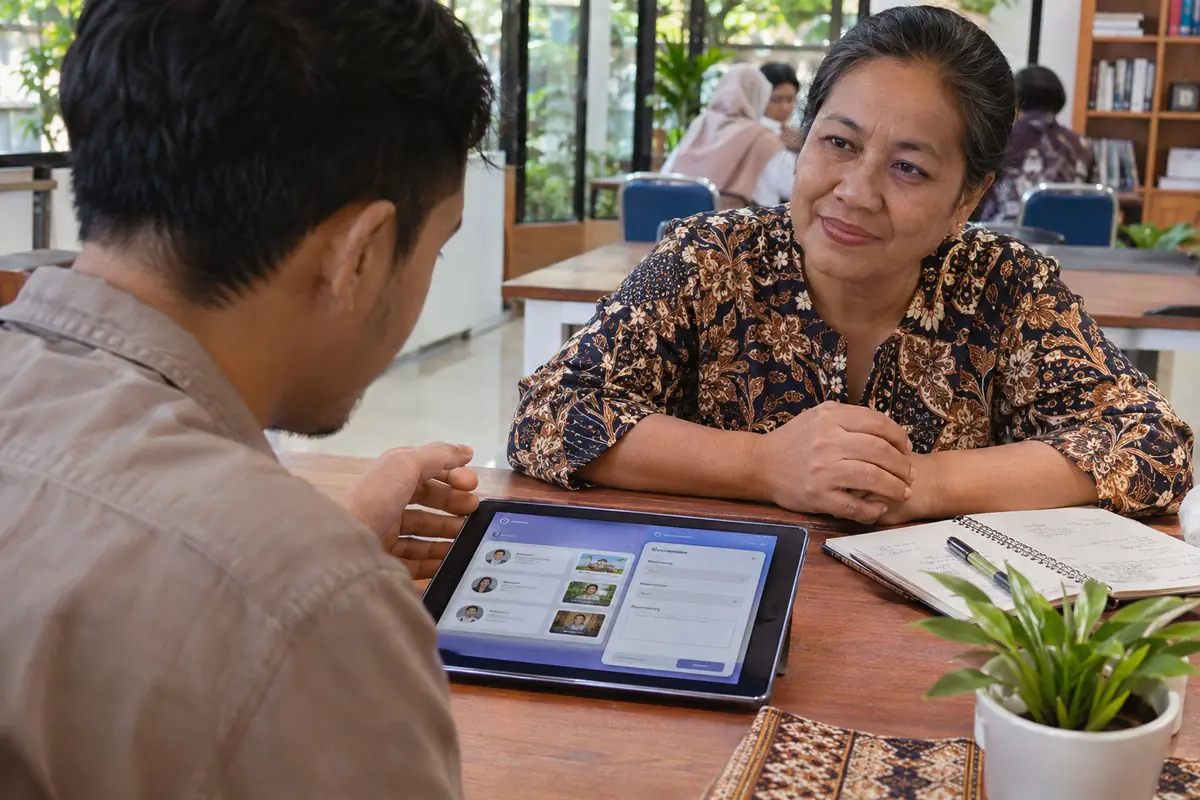
In Indonesia, a P2P loan from peer lending platforms is money lent between individuals or institutions and borrowers through a licensed electronic marketplace instead of a bank balance sheet. The operator screens borrowers, publishes the request, collects repayments and passes funds to the lenders who financed it. Borrowers include salaried workers, micro-entrepreneurs and small firms that find bank credit slow or out of reach. Lenders accept the risk of default in exchange for a return. Only operators holding an OJK licence may run such a marketplace legally.
The legal framework behind peer lending
Peer lending in Indonesia is formally called technology-based joint funding services. The Financial Services Authority (OJK) grants the licence, supervises the operators and publishes the register of platforms that may operate. A company that is not on that register has no legal right to take deposits from the public or to lend through an app.
Licensed operators must be Indonesian-incorporated companies with minimum capital, a management team that passes a fit and proper test, and systems that meet information-security standards.
Unlike a bank, a platform does not lend its own balance sheet and does not guarantee repayment. It is an intermediary. That distinction is the single most important idea for anyone who funds or borrows through it, because the credit risk stays with the lender while the platform earns a fee for matching and administration.
The industry association (AFPI) adds a code of conduct on advertising, collection practices and transparency, and members commit to follow it on top of the official rules.
How a loan moves from request to repayment
The process is fully electronic. A borrower installs the application or opens the browser version, registers with an identity card, a phone number and a selfie, and links a bank account. The platform runs credit scoring using the identity data, income evidence, bank statements and information from the OJK credit system.
Approved requests are listed or matched automatically. Funds from lenders go into a segregated account, and the borrower receives the money in a bank account once the electronic agreement is signed. The agreement states the amount, tenor, fees and the cost of late payment.
Repayment follows the schedule, usually monthly or in a lump sum at the end of a short tenor. Payments go through a virtual account, and the platform distributes them to lenders after deducting its charges.
When a loan is late, the platform may send reminders, offer restructuring or pass the file to collection staff who must respect conduct rules. Disbursement and repayment data are reported to the credit information system, so a missed payment follows the borrower to other lenders.
Who borrows and who lends
Borrowers fall into two broad groups. Consumers use small loans for school fees, medical bills, repairs or the gap between salary dates. Productive borrowers, such as market traders, farmers, home-based sellers and small manufacturers, use funds for stock, equipment or working capital.
Some platforms specialise in a segment. One focuses on women micro-entrepreneurs in villages, another on invoice financing for suppliers, another on salaried employees through partner companies. A borrower should look for the segment the product was built for, since a platform designed for traders will rarely serve a first-time consumer well.
On the lending side, individuals can usually start with small sums and diversify across many borrowers. Institutions such as banks, insurers and funds also channel money through platforms to reach segments they cannot serve directly.
Lenders must accept that returns are not guaranteed and that capital can be lost. A balanced approach is to spread funds, avoid putting all savings in one platform and read the loan-quality figures that operators publish.
Costs, limits and what to compare
Total cost on a peer lending loan includes the interest or margin, an administration or origination fee, and charges for late payment. Because tenors are short, a modest-looking monthly figure can translate into a high annual cost, so comparing the effective annual rate is more useful than comparing daily or monthly percentages.
Regulators and the industry code set limits on the total cost that a platform may charge and on the amount a single borrower can obtain. These ceilings are revised from time to time, so the current figure should be confirmed with the operator and the regulator before borrowing.
Questions worth putting to any platform before accepting an offer:
- What is the full repayment amount in rupiah, with every fee included?
- Is there a penalty for early repayment?
- How are late fees calculated and is there a cap?
- Which bank holds the funds and which entity is the lender of record?
Comparing two or three licensed offers on the same day takes little time and often reveals large gaps in total cost.
Protecting personal data and dealing with collection
Licensed platforms may ask for the camera, the microphone and the location of a phone during onboarding, but they are not allowed to read the contact list or the photo gallery. An application that insists on those permissions is a strong indicator of an unlicensed operator.
Personal data protection law gives borrowers rights over how their information is collected, stored and shared. A borrower may ask what is held, request correction and complain when data is disclosed to third parties without a valid basis.
Collection must follow rules of conduct. Threats, humiliation, contacting people from the borrower's phone book and visits at unreasonable hours are all prohibited. A borrower who faces such behaviour should save screenshots, call logs and messages and report them.
Paying a debt is a duty, yet it does not extend to tolerating harassment. A complaint can be filed with the platform first, then with OJK on 157 or through its WhatsApp line, and the police when threats are involved.
Telling licensed platforms from illegal ones
Illegal lending apps copy the look of real platforms. They promise quick approval without checks, ask for permissions that the law forbids, deduct large fees before disbursing and set very short tenors with penalties that grow daily.
A simple verification routine reduces the risk:
- Search the platform's legal entity name in the OJK register of licensed operators
- Confirm that the app name in the store matches the licensed brand
- Check that the company address, contact channels and agreement text are consistent
- Walk away from any lender that contacts you first by message or phone
A government task force on illegal financial activity (Satgas PASTI) receives reports on unlicensed lenders and works with the telecommunications ministry to block their websites and apps. Reporting an operator takes a few minutes and helps other borrowers.
Using a licensed platform does not remove risk, but it gives access to regulated procedures, supervised complaint channels and credit reporting that protects both sides.
Frequently asked questions
Is a P2P loan safe in Indonesia?
It is lawful and supervised when the platform holds an OJK licence, but it is still a loan with real costs and no deposit guarantee for lenders. Safety for borrowers depends on verifying the licence and reading the agreement before signing.
What is the difference between a peer lending platform and a bank?
A bank lends deposits that it holds and bears the credit risk. A platform matches lenders with borrowers and takes a fee, while the lenders carry the risk of default.
What documents do I need to borrow through a platform?
Typically an identity card, a phone number, a selfie, a bank account and proof of income or business activity. Productive loans may also ask for business documents.
Can a licensed platform read my contacts?
No. Licensed operators may request only the camera, microphone and location, so a request for the contact list is a warning sign.
Where can I complain about a platform?
Start with the operator's complaint channel. If the answer is unsatisfactory, contact OJK on 157, and report threats or harassment to the police.
Further reading
- Amartha (English) : English page of an Indonesian fintech platform offering group loans to village micro-entrepreneurs and funding options for investors.