
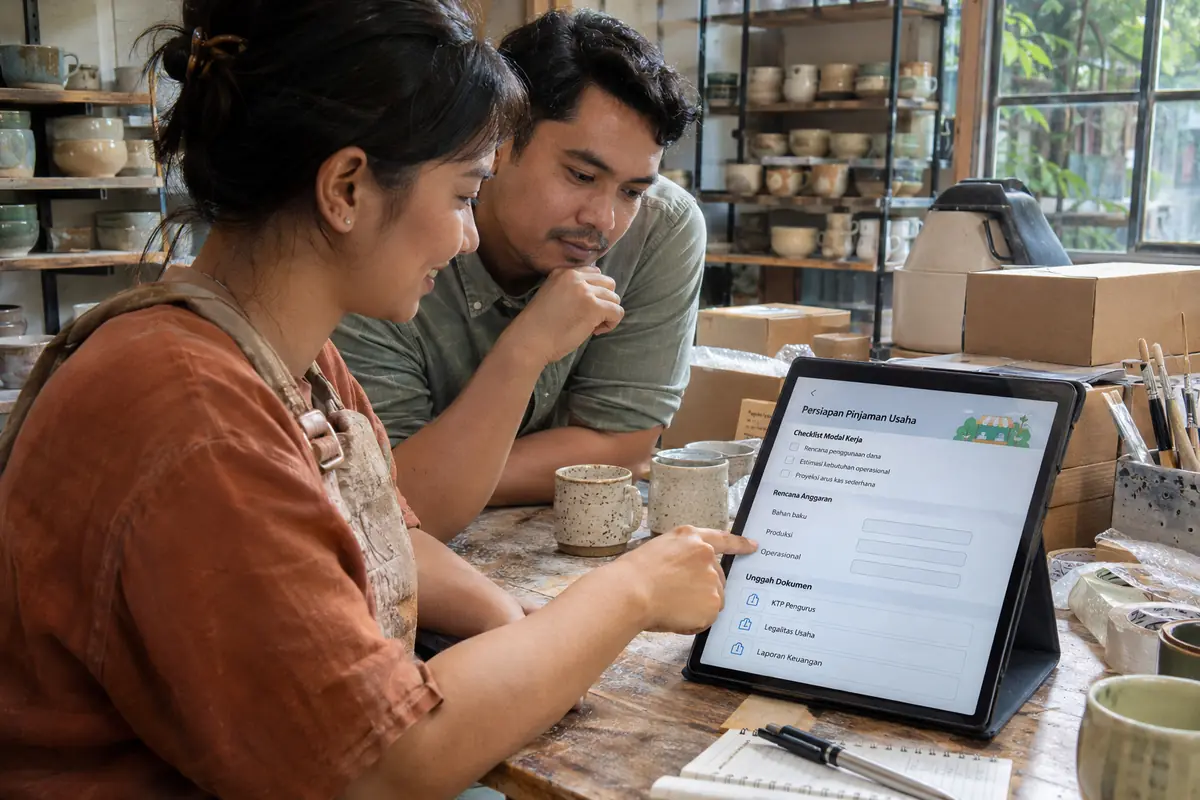
In Indonesia, startup business loan application requirements are the documents, legal status and financial evidence that a bank or licensed lender asks from a young company before approving credit. They typically include proof of identity of the owners, a business identification number, tax registration, company deeds for limited companies, bank statements and sometimes a business plan or collateral. Founders, cooperatives and small entrepreneurs can use the list to prepare a complete file, understand why lenders ask for each item and judge whether the business is ready to borrow.
Legal identity of the business
Lenders first want to know who is borrowing. An individual entrepreneur is identified by the electronic identity card, while a company is identified by its deed of establishment and the legal approval issued by the ministry responsible for law. Partnerships such as CV and limited liability companies known as PT have different papers, and the person signing for the company must show authority to do so.
Most lenders also require the business identification number, known as NIB, which is issued through the government's online single submission system. The NIB acts as the business registration and, depending on the activity, as the basis for other permits. A startup that has not registered yet should do so before applying, since a missing number often stops the file at the first screening.
Tax and administrative documents
A taxpayer number for the owner and, for a company, for the business entity is a standard request. Some lenders also ask for recent tax filings if the business is already required to submit them. For very small businesses, the tax paperwork is lighter, but the number is still requested for identification.
Address evidence is another common item. This can be a domicile letter, a lease agreement for the premises or a utility bill that shows where the business operates. Lenders use it to arrange verification visits and to confirm that the business exists in practice. Where the business is run from a home, a letter from the neighborhood administration is often accepted, but each lender decides what it will take.
Financial records and proof of cash flow
Because startups have a short history, the way they present financial evidence matters. A lender wants to see that money flows through the business consistently and that it can carry installments.
- Business bank statements for the most recent months, ideally kept separate from personal accounts.
- Sales records, invoices, marketplace dashboards or payment gateway reports.
- Simple financial statements such as an income statement and balance sheet, even if unaudited.
- A list of existing debts and their installments.
- Contracts or purchase orders from customers, when available.
Clean records often count more than a large sales figure, because they make the numbers believable.
Business plan and purpose of the loan
Banks and platforms usually ask how the money will be used and how the business will repay it. A concise plan should describe the product, the target customers, the market, the team, the cost of the funds needed and a realistic cash flow projection for the loan period.
A specific purpose, such as buying inventory for confirmed orders or a machine that raises production capacity, is more convincing than a vague request for capital. The plan should also show how the lender will be repaid if sales grow more slowly than hoped, since lenders analyze risk before opportunity.
Numbers need a basis. Costs of materials, wages, rent and marketing should be listed with their monthly amounts, and the expected sales should be linked to something observable such as current orders, a pilot period or traffic data. Lenders respond better to cautious estimates that can be defended than to optimistic ones that cannot.
Operating history, owner profile and credit record
Many programs specify a minimum time in operation. Government-backed small business credit offered through banks, for instance, asks that the business has been running for a number of months, and some programs also restrict applicants who already hold other productive loans. These conditions are set by each bank and program, so the current terms should be confirmed before applying.
The owner's credit record is read through the credit information system of the Financial Services Authority, and repayment history on previous loans, credit cards and even installment purchases is visible. A clean record supports the application, while arrears can cause rejection or higher cost. Founders can obtain their own report in advance and correct errors. Young founders with no borrowing history are not penalized as such, although a small, well-repaid first loan or card builds the record that later financing relies on.
Collateral and guarantees
Small unsecured facilities for micro businesses may require no collateral, but larger amounts often do. Accepted collateral can include land and buildings, vehicles, machinery, inventory or receivables, always subject to valuation and legal registration.
Startups with few assets may be asked for a personal guarantee from the owners, or a guarantee scheme may be used to share risk with the lender. The borrower should understand what happens if the loan cannot be repaid, including the risk to personal assets, before signing. Insurance on financed assets or on the borrower's life may also be offered or required, and its premium should be counted in the total cost.
Preparing the file and avoiding rejection
A complete and consistent file is the best protection against delay. Names, addresses and figures should be identical in every document, scans should be clear and the amount requested should match the purpose and the repayment capacity.
Common reasons for rejection are an unregistered business, mixed personal and business accounts, high existing debt, overstated sales and unrealistic plans. If an application is turned down, ask for the main reason, fix it and reapply later. Asking the lender for its checklist in advance saves repeated submissions. Always check that the lender is licensed, avoid paying any fee in advance to a person who promises approval and use the consumer service of OJK on 157 for complaints.
Frequently asked questions
Does a startup need a registered company to borrow?
Not always, since some lenders serve individual entrepreneurs. A registered business identification number and, for companies, the legal deeds make approval much easier.
How long must a business operate before applying?
It depends on the lender and program. Several small business credit programs ask for a minimum operating period, so confirm the current rule with the bank.
Are financial statements required from new companies?
Lenders usually ask for bank statements and sales records, and simple financial statements help. Audited reports are normally required only for larger facilities.
Is collateral always required?
No. Small loans may be unsecured, but larger loans often require assets or a guarantee, which are valued and registered before disbursement.
Can a past late payment block approval?
It can lower the chance or raise the price, because lenders read the credit record. Fixing arrears and waiting before reapplying can improve the result.
Further reading
- Bank BRI KUR (Indonesian-language page; no English version verified) : Official bank page on government-backed small business credit, with product types and the documents and conditions applicants must meet.