
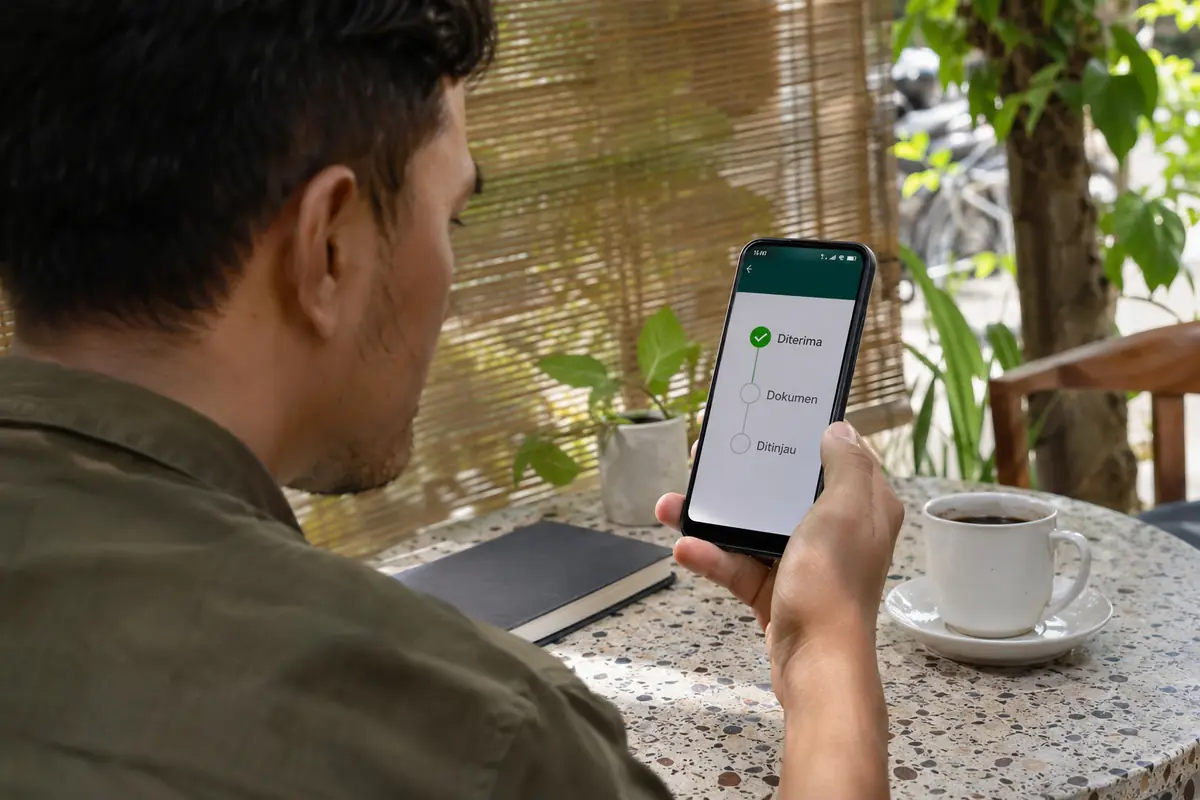
In Indonesia, a bank loan online application process is the sequence of steps a borrower follows to request credit from a licensed bank through a mobile banking app or website instead of a branch counter. It covers choosing a product, entering personal and income data, uploading documents, passing identity and credit checks, receiving an offer, signing the agreement and getting the funds. It suits salaried employees, entrepreneurs and households that want to compare terms, submit paperwork and follow the status of a request without queuing.
Choosing the right bank product first
Banks that operate in Indonesia usually let applicants start online for several kinds of credit. The most common are kredit tanpa agunan (unsecured personal credit), kredit multiguna, vehicle financing known as KKB, and home financing known as KPR. Each product has its own required documents, minimum income and review time, so the first decision shapes everything that follows.
An unsecured loan relies on the applicant's income and credit history, which keeps the file short but usually means a higher cost. Vehicle and home loans are secured by the asset being bought, so the bank asks for property or vehicle papers and an appraisal. A borrower who knows the purpose of the money, the amount needed and the monthly payment that fits the household budget will fill in the online form faster and with fewer corrections.
Documents and data usually requested
Most banks ask for the same core identity set. Having clear digital copies ready before opening the form avoids timeouts and rejected uploads.
- Electronic identity card (KTP) and often a selfie or face check to confirm the applicant is the card holder.
- Taxpayer number (NPWP) for loans over a bank-specific threshold, and sometimes the family card (Kartu Keluarga).
- Proof of income: recent payslips and an employment letter for employees, or business permits, financial statements and bank statements for the self-employed.
- Account statements covering a recent period, so the bank can read cash flow.
- For secured loans, the asset papers such as a land certificate or vehicle registration, plus the sales offer from the developer or dealer.
Requirements differ by bank and by product, so the list shown inside the application is the one that counts.
Submitting the request through the app or website
After logging in to a mobile banking app or the bank's web portal, the applicant selects the loan, enters the desired amount and tenor, and sees an installment simulation. Existing customers often get pre-filled data, while new customers must first register and verify their identity digitally.
The application is then sent with a reference number. Keep that number: it identifies the file when the bank calls, sends a message or when a complaint becomes necessary. Entering information that does not match the identity card or the payslip is a frequent reason for delay, so spelling of names, addresses and employer details deserves a careful second look before pressing submit.
Verification, credit checks and analysis
Once the file arrives, the bank checks identity, workplace and contact numbers. A credit officer may phone the applicant or the employer, and secured loans can involve an appraiser visiting the property or inspecting the vehicle.
Banks also consult the credit information system managed by the Financial Services Authority, known as SLIK OJK, which shows existing loans, repayment history and quality of payments. A history of late installments lowers the chance of approval or raises the price. Applicants can request their own SLIK report from OJK to see what the bank will see and to correct mistakes before applying.
Offer, agreement and electronic signature
If the analysis is positive, the bank issues an offer stating the approved amount, tenor, interest rate, fees and installment. This is the moment to compare the offer with the original simulation and read every cost line.
Agreements can often be signed electronically with a certified digital signature, while mortgages still require formal deeds drawn up before a notary or land deed official and the registration of the security right. Never sign a blank or partly filled document, and ask for a copy of the full agreement and the repayment schedule. The borrower has the right to understand every clause before agreeing.
Before confirming, check that the name, amount, tenor and account number printed in the draft match the offer, because corrections after signing are slow and sometimes require a new document. Many banks also send a confirmation code to the registered phone number, which must never be shared with anyone, including callers who say they work for the bank.
Costs to compare before accepting
The interest rate alone does not describe the real cost. A fair comparison looks at the total amount paid over the life of the loan.
- Provision or administration fee charged at disbursement.
- Insurance premiums for life cover or for the financed asset.
- Appraisal, notary and security registration fees on secured loans.
- Late-payment charges and early-repayment conditions.
- Whether the rate is flat or effective, since the two give very different totals.
Banks must present costs clearly, and any figure that is unclear should be asked about in writing before the signature.
Disbursement, repayment and what to do if problems arise
After signing, the funds are transferred to the borrower's account, or directly to the developer, dealer or seller for secured purchases. Installments are usually deducted automatically, so keeping enough balance on the due date prevents penalties and a worsening credit record. Setting a reminder a few days earlier is a simple habit that protects the repayment history, which matters for every later loan.
If a request is declined, the borrower can ask for the general reason, repair the weak point such as high existing debt, and apply again later. For disputes about fees, collection behavior or unclear terms, contact the bank's complaint channel first. When the answer is unsatisfactory, the consumer contact service of OJK on 157 accepts escalated complaints about financial institutions.
Frequently asked questions
Can a bank loan be approved entirely online in Indonesia?
Some unsecured loans for existing customers can be processed digitally from request to disbursement. Secured loans such as mortgages usually still need an appraisal, formal deeds and registration, so part of the process takes place offline.
How long does an online bank loan review take?
It depends on the product and the completeness of the file. Small unsecured loans can be reviewed within days, while home and vehicle loans take longer because assets must be verified.
Can the amount be repaid early?
Most banks allow early repayment, but conditions differ. Some charge a penalty during the first years of the loan, so the clause should be checked in the agreement before signing.
Is it safe to upload identity documents in a banking app?
Only use the official app downloaded from a store or the bank's own web address, and never send documents through chat messages from people claiming to represent a bank.
Where can complaints about a bank loan be sent?
Start with the bank's complaint unit and keep the reference number. If unresolved, OJK handles consumer complaints through its 157 contact service.
Further reading
- Bank Mandiri (Indonesian-language page, no English version of this page) : Official page of a major Indonesian bank describing its loan products and the Livin' by Mandiri app used for digital banking services.