
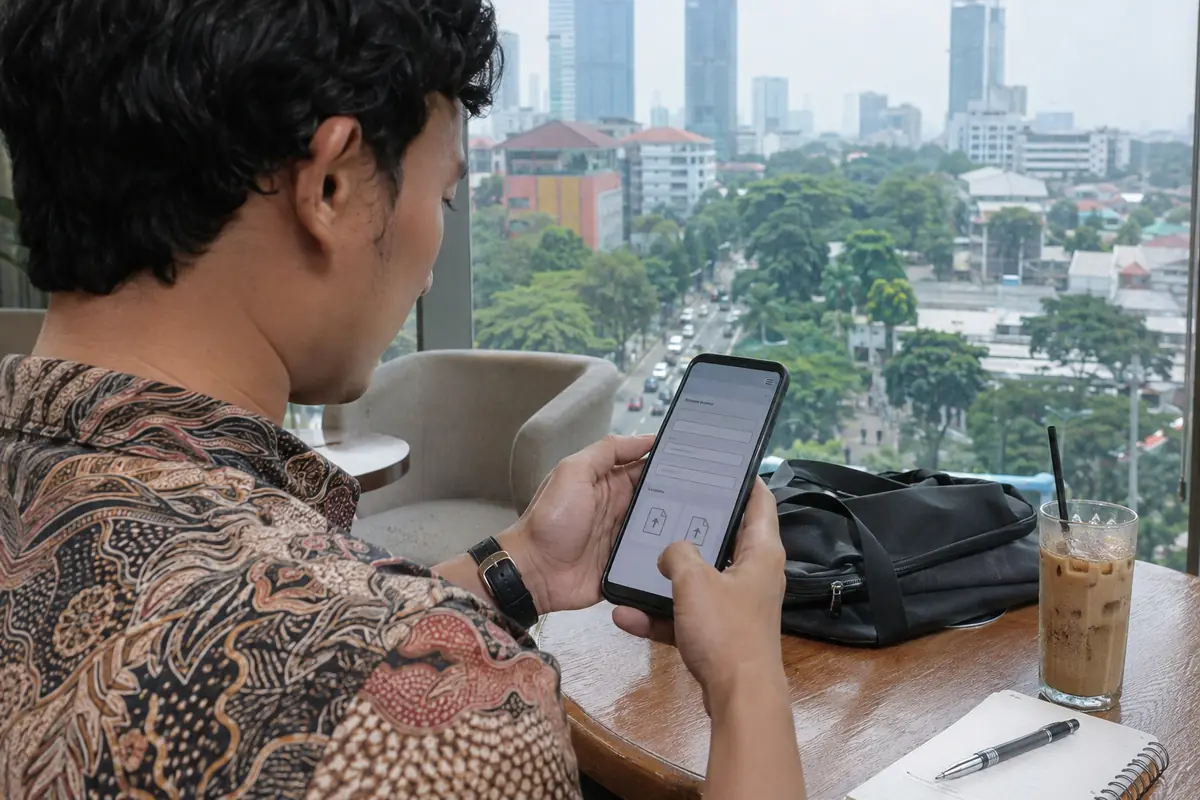
In Jakarta, online loan apps with several application options let residents borrow from a phone instead of queuing at a branch, whether they live inside the Special Capital Region or commute from the wider Jabodetabek belt. The category covers licensed peer-to-peer platforms, bank mobile apps, multifinance companies and pawn services, each with its own documents, review time and cost structure. It suits salaried staff, ojek and delivery drivers, market traders and small business owners who need money for rent, school fees, stock or an emergency repair. Only lenders registered with the financial regulator deserve consideration.
A province built around one city
Jakarta is the only Indonesian city that is also a province in its own right, formally called DKI Jakarta. Its residents number about 10.6 million, and the daily flow of commuters from Bogor, Depok, Tangerang and Bekasi pushes the working population well beyond that figure. Money moves fast here: salaries are paid on fixed dates, rents are high, and a large share of household budgets goes to housing, transport and school costs.
That pressure explains why borrowing apps are so visible in the capital. A shortfall of a few days before payday, a deposit for a rented room in Tebet or Kemayoran, or a motorbike service bill can all be covered by a small digital loan, provided the borrower understands the repayment schedule before accepting it.
Kinds of lenders reachable from a phone
Residents of the capital can reach four broad families of lenders without leaving home.
- Licensed peer-to-peer lending platforms, which match borrowers with many individual and institutional funders.
- Mobile banking apps of national banks, which offer personal loans or salary-linked credit to existing account holders.
- Multifinance companies, which finance vehicles, electronics and other goods in instalments.
- Pawn services, where gold or other items serve as collateral for a short loan.
Each family answers a different need. Peer-to-peer platforms are fast for small amounts, banks usually charge less but ask for more paperwork, and pawn loans avoid credit checks because the item secures the debt.
Everyday reasons residents borrow
Purposes differ sharply by neighbourhood and occupation. Office workers in Kuningan or Sudirman often borrow to cover a rent deposit or a relocation. Traders in Tanah Abang and Glodok look for short working capital before a busy season, while online sellers in Jakarta Barat need stock money ahead of a sale day. Gig workers on two wheels sometimes borrow to repair a motorbike so they can keep earning.
Parents also use digital credit for admission fees at the start of the school year. In every case the sensible test is the same: will the money produce income or avoid a larger loss, and can the instalment be paid even in a weaker month?
Bank DKI and the capital's banking landscape
The regional development bank of the province is Bank DKI, which serves civil servants of the provincial government, Transjakarta staff, pensioners and small businesses through its own credit products. Alongside it sit the large national banks, most of which keep their head offices along the Sudirman and Thamrin corridor.
Bank Indonesia has its national headquarters on Jalan MH Thamrin, and the Financial Services Authority, known as OJK, has its head office in the city as well. This concentration means that complaints, licence questions and consumer education events are easier to follow up in Jakarta than almost anywhere else in the country.
How an application usually unfolds
The process on a licensed platform follows a similar pattern from one app to the next.
- Download the app only from the official store and check that the company name matches a licence.
- Register with a mobile number and confirm it with a one-time code.
- Photograph the national identity card and take a selfie for verification.
- Enter employment or business details and a bank account in the borrower's own name.
- Read the full offer: principal, tenor, daily or monthly cost, late fee and total repayment.
- Accept only if the monthly instalment fits comfortably inside the household budget.
Review is often automated, but a human check may follow for larger amounts. Salaried workers can add a payslip, while freelancers may be asked for account statements.
Costs and terms worth comparing
A loan offer should be judged by the total amount repaid, not by the headline instalment. Compare the administration fee, the cost per day or per month, the penalty for late payment and the cost of early settlement.
Borrowers in a high-rent city often stack several small loans, and that is where trouble starts. A useful habit is to add every monthly commitment, including rent, transport and existing instalments, and keep total debt payments well under what feels safe. Shorter tenors reduce total cost but raise the monthly burden, so the right balance depends on how stable the income is.
Risks that are specific to a big city
Dense neighbourhoods and heavy social media use make Jakarta a target for illegal lenders. Typical warning signs include offers that arrive by text message or WhatsApp without being requested, demands for access to the phone's contacts and photos, and fees deducted from the loan before it is paid out.
Collectors who threaten family members, workplaces or neighbours act outside the rules. Legitimate lenders may remind a borrower of a due date, but they may not harass, shame or contact people listed in the phone. Anyone facing this should keep screenshots and report it.
Checking a lender and using consumer channels
Before applying, search the lender's name in the OJK register of licensed lending platforms or call the OJK consumer contact on 157. The same line accepts complaints when a licensed company breaks the rules. Reports about unlicensed offers can also go to the joint task force that handles illegal financial activity.
Borrowers can additionally review their credit record through the OJK credit information system, which helps them spot errors or unknown loans taken in their name. A clean record makes bank products cheaper over time, so repaying small digital loans on schedule is worth the effort.
Frequently asked questions
Do I need to live inside DKI Jakarta to use these apps?
No. Licensed lenders serve borrowers across the country, so residents of Bekasi, Depok or Tangerang can apply too. What matters is a valid identity card, a bank account in the borrower's name and a phone number registered to the applicant.
Is a bank app safer than a peer-to-peer platform?
Both can be safe if licensed. Bank apps usually carry lower costs but require an existing relationship, while peer-to-peer platforms accept newer customers at higher cost. Safety depends on the licence, clear terms and responsible collection.
How fast can funds arrive?
Some platforms transfer within hours after approval, others take a few working days, especially when manual checks apply. Speed should never replace a careful reading of the cost and repayment schedule.
What should I do if a collector threatens me?
Stop paying under pressure, save every message and call record, and contact OJK on 157. Threats, public shaming and contacting relatives or colleagues are not allowed for licensed lenders.
Can a freelancer or street trader qualify?
Often yes, but evidence of income matters. Lenders may accept bank statements, e-wallet history or proof of a business location instead of a payslip, and limits tend to start low until a repayment record builds up.
Further reading
- CIMB Niaga personal banking : Bank with Jakarta head office offering home loans, personal loans and secured credit; the page is mainly in Indonesian with an English toggle.