
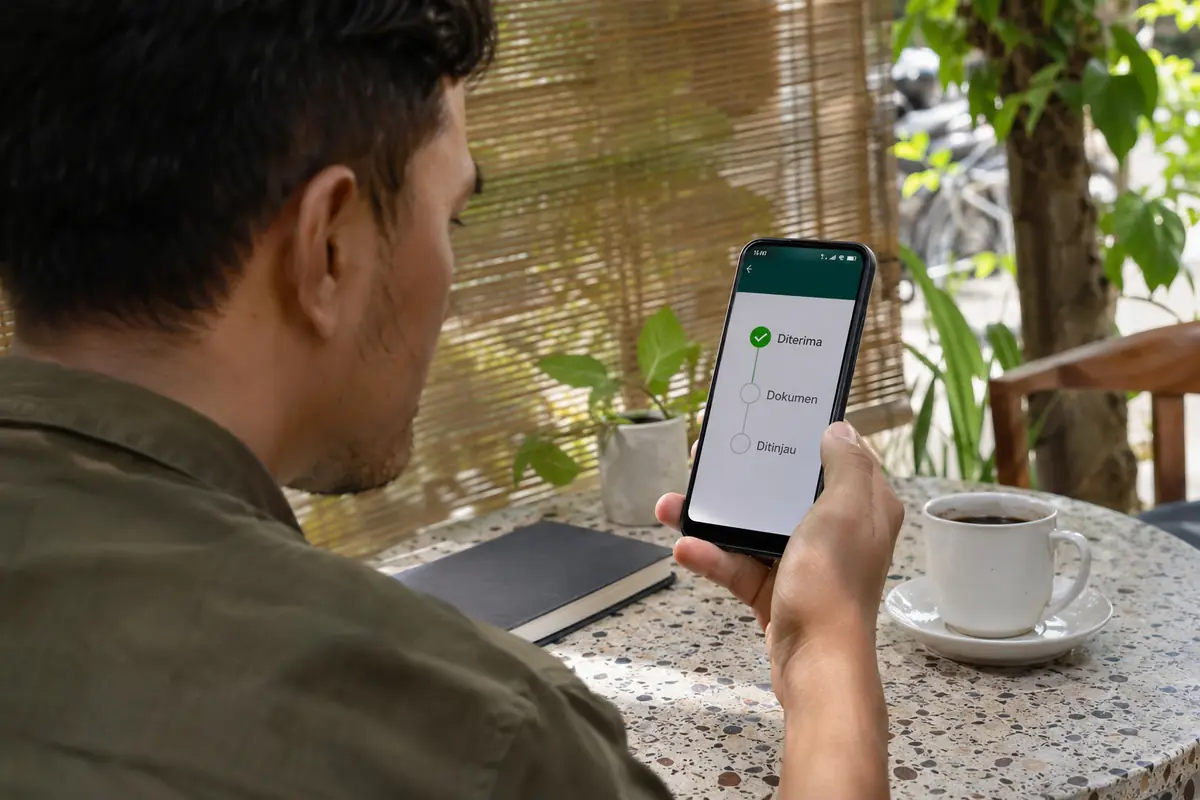
In Batam, a loan app is a digital route to online financing options that residents of this Riau Islands city can use without visiting a branch. It brings together bank mobile services, licensed peer-to-peer lenders and pay-later features, and it matters most to factory employees, shipyard crews, traders at the ports, small restaurant owners and the many newcomers from other provinces. The city's free trade zone status, its closeness to Singapore and its large contract workforce create borrowing needs that differ from those of an inland city.
An island city built on industry and trade
Batam lies in the Riau Islands province and is linked to nearby Rempang and Galang by the Barelang bridges. Its economy grew around a free trade zone managed by the Batam Indonesia Free Zone Authority (BP Batam), with electronics assembly, shipbuilding and repair, oil and gas support, logistics and a growing number of data and digital facilities. Ferries connect Batam Centre, Harbour Bay and Sekupang with Singapore, which keeps tourism and cross-border trade active.
The population is about 1.2 million, and a large share arrived as workers from Sumatra, Java and eastern Indonesia. Many have no family property or collateral nearby, which makes unsecured digital credit attractive and makes careful comparison essential.
Typical borrowers in the city
Several borrower profiles stand out in Batam.
- Production-line workers in Batu Ampar, Batu Aji and Muka Kuning industrial estates, often on renewable contracts, who need short bridging loans or money for a motorbike.
- Shipyard and offshore support crews whose pay arrives in cycles tied to projects.
- Traders, stall owners and small restaurant operators in Nagoya, Jodoh and Panbil who buy stock in bulk.
- Families remitting money home or paying for a move, wedding or school tuition for children left behind.
Contract status is the main filter lenders use, so permanent and contract employees are often offered quite different limits.
Seasonality also plays a part. Orders for electronics and shipping fluctuate through the year, and contract renewals tend to cluster at particular months, so borrowers who plan repayment around the end of a contract are more likely to stay current.
Kinds of loan apps and lenders on the island
Residents can choose among national bank apps, regional bank services, licensed online lenders and pay-later wallets. Bank Riau Kepri Syariah, the regional development bank headquartered in the province, serves public servants and local businesses through branches and its own digital channel. National banks such as BRI, BNI, Mandiri and BCA are present across the island.
Licensed online platforms on the OJK register screen applicants digitally and release funds to a bank account within a short period. Sharia-based financing is available too, which suits residents who want contracts structured without interest.
Residents who like to keep everything in one place often start with the bank where their salary is paid, because an existing account gives the lender a visible income history. Those without a bank relationship may find a digital platform easier to qualify for, though the limits are usually smaller at first and rise only after on-time payments.
Documents, verification and disbursement
Expect to upload a KTP, a selfie and sometimes a family card (KK). Employees are asked for a payslip, an employment contract or a bank statement showing salary credits, while entrepreneurs may need a business licence number (NIB) or sales records.
Because many workers hold a KTP issued elsewhere, applicants should make sure the address in the app matches their identity documents or can be explained. The lender checks the credit record through OJK's SLIK system and phone data, then presents an offer. Disbursement goes only to an account in the applicant's own name.
If a photo or document fails the automatic check, retake it in good light instead of submitting someone else's details. Applications made with another person's identity are treated as fraud and can leave a lasting mark on the credit record.
Reading the cost of a Batam loan
Compare the monthly instalment, but also the interest or margin, administration charge, insurance and the penalty for late payment. A loan taken to cover a short gap between paydays should be repaid quickly, so a short tenor with a clear total is easier to manage than a long one with hidden extras.
Workers paid partly in overtime should base the instalment on basic pay, since overtime can vanish when orders slow. Currency matters little for rupiah loans, but anyone who also sends money to relatives should remember that remittance fees come on top of the loan cost.
A useful habit is to write down three figures before accepting: the amount received in the account, the amount repaid in total and the final due date. If any of the three differs from what the screen promised, stop and ask the lender for a written explanation.
Local institutions and where to complain
Bank Indonesia and OJK both maintain offices for the Riau Islands in Batam, which makes it easier for residents to approach regulators in person. Consumers may contact OJK by calling 157 or messaging its WhatsApp line after the lender's own complaint channel has been tried.
Labour unions and company human-resources departments sometimes help workers who feel pressured by a lender, and the local consumer protection body (BPSK) can mediate disputes over agreements. Keeping every message and receipt is the practical basis for any complaint.
Public servants and teachers in Batam have an extra option through the regional bank and cooperatives linked to their workplace, where payroll deduction can reduce the risk of late payment. Cooperatives that are properly registered are a legitimate alternative to apps, provided their rules are written and transparent.
Online lending and small enterprises
Batam's smaller firms include repair shops, catering services, freight forwarders and sellers who serve both islanders and visitors. Their cash flow follows ferry traffic and factory pay dates, so a flexible repayment schedule helps. Working-capital loans from banks, including People's Business Credit (KUR), usually cost less than consumer apps, although the paperwork is heavier.
Entrepreneurs should separate personal and business money before applying. A clean record of transfers makes it easier for lenders to estimate income, and it protects the owner if a dispute occurs.
Local risks and safe habits
Newcomers are the favourite targets of illegal lenders, who contact workers through dormitory chat groups and promise instant funds with no checks. Typical red flags include demands for contact-list access, upfront fees, threats of public shaming and an unfamiliar app installed from a link instead of an official store.
Check the platform on the OJK register before sharing a KTP, report suspicious offers to Satgas PASTI and never pay a collector in cash. If harassment starts, record the calls and bring the evidence to the police or OJK.
Dormitory residents should also be wary of colleagues who offer to arrange a loan for a commission, since the borrower remains responsible if the broker disappears.
Frequently asked questions
Which loan app options are common for workers in Batam?
Employees usually compare bank personal loans, licensed online platforms and pay-later services. Contract status and payslip history often decide the limit offered.
Can a newcomer with an out-of-province KTP apply?
Many platforms accept it, but the address must match the documents or be explained. Some lenders may ask for an employer letter.
Are online loans in Batam regulated?
Yes. Licensed platforms are supervised by OJK, must disclose costs and may not threaten borrowers. Unlicensed ones have no such obligations.
What should be compared before accepting an offer?
Look at total repayment, fees, penalty rules, tenor and whether the instalment fits comfortably within basic pay.
Where can a Batam resident file a complaint?
First with the lender, then through OJK at 157. Evidence such as the agreement, screenshots and receipts speeds up the process.
Further reading
- Bank BRI (English site) : A major state-owned bank presenting its mortgage, vehicle and Briguna personal loans, along with micro and small business credit.